

Venerdì 26 gennaio 2024, dalle ore 17, presso la sede dell’Associazione Esperantista Trentina, a Trento in via Zara 7/A, avrà luogo un rinfresco assieme alle…
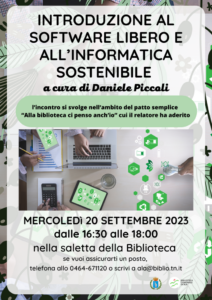
Mercoledì 20 settembre 2023, alle ore 16.30, in occasione della ripresa dello sportello Linux presso la biblioteca di Ala, ci sarà una breve presentazione per…

(Aggiornamento: video della serata, con chat associata per domande e risposte, puoi anche entrare direttamente in chat con un client xmpp) (Aggiornamento: video catturato da…

Video sul canale “incontri” dell’istanza PeerTube di LinuxTrent e Presentazione PDF. Stypox è uno degli sviluppatori di NewPipe. NewPipe è un famoso client per Android…

La tecnologia permea sempre di più le nostre vite e la società, a volte con effetti positivi, altre manipolandoci e sottraendoci tempo e attenzione. Esiste…

“Mozilla Common Voice è un’iniziativa per insegnare alle macchine come parlano le persone nella vita reale. La voce è naturale, la voce è umanità. Per…

Cosa ti fa pensare che il backup sia una strana cosa che fanno quelli che stanno giorno e notte sul PC, senza darsi tregua, per…

Nell’era dell’infodemia crediamo sia sempre più necessario sviluppare ed allenare il proprio pensiero critico, nell’ottica di un utilizzo consapevole degli strumenti che Internet ci mette…

Giovedì 19 Agosto 2021, alle ore 18 cercheremo in un breve incontro online di un’ora di fare chiarezza su questi strumenti di autenticazione, e in…

RESOLU “Réseaux Éthiques et Solutions Ouvertes pour Libérer vos Usages“, cioè “Reti Etiche e Soluzioni Aperte per Liberare i vostri Utilizzi” è “una guida all’utilizzo…